 Web DevelopmentWebsite Design Cost in the UK: What Shapes the Price of a Business WebsiteThe factors behind the price of a UK business website, one off and monthly, and how to compare quotes.
Web Design Company in Manchester: Websites That Win Customers Across Greater Manchester
How Greater Manchester businesses get a website that wins local customers.
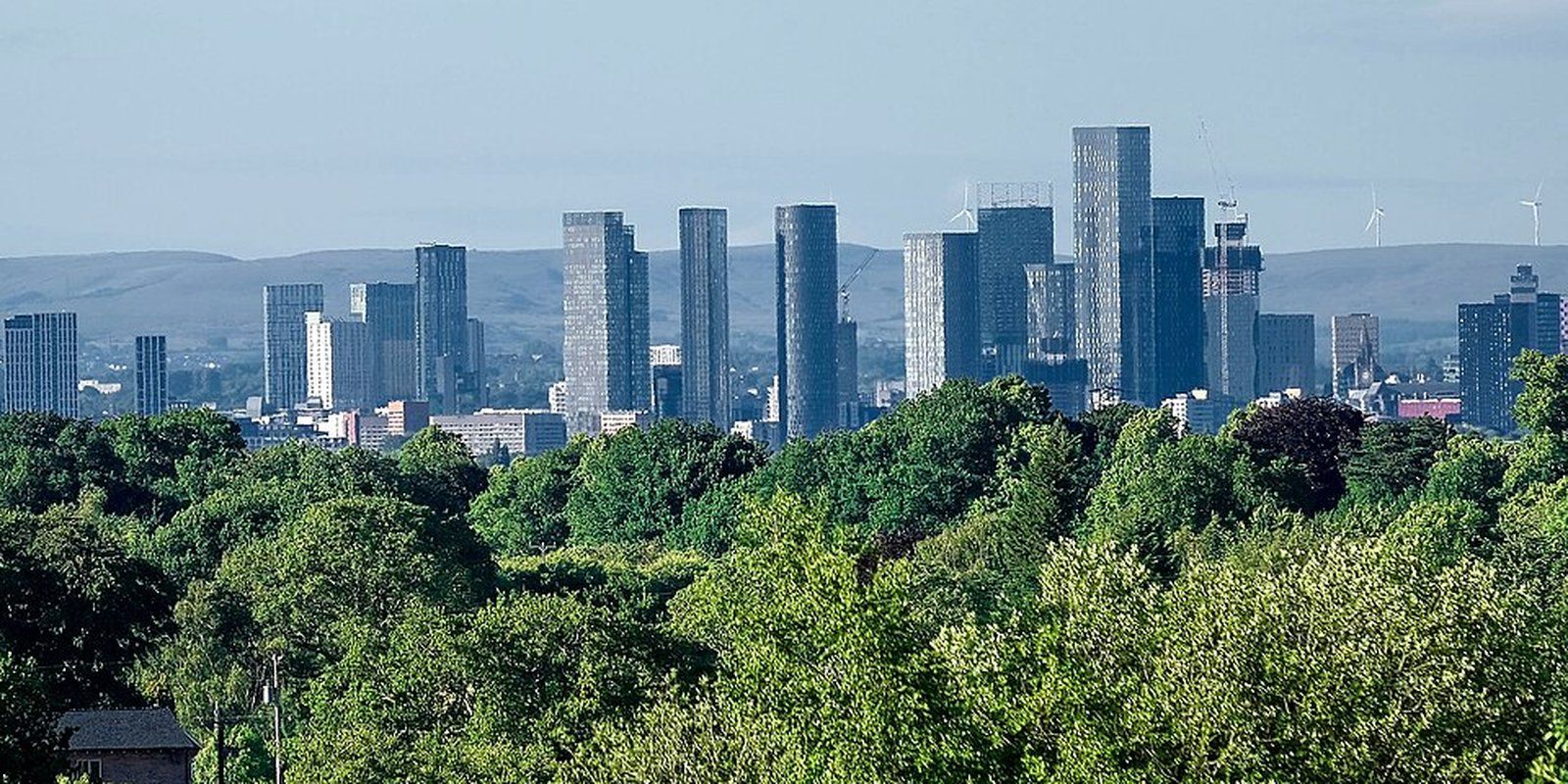
Effective web design Manchester businesses can rely on combines a clear structure, fast mobile pages and local search foundations that reach customers across all ten boroughs of Greater Manchester. The right partner scopes the work in writing, builds to UK accessibility and data protection standards, and measures success in enquiries and sales rather than how the homepage looks on launch day.
The usual starting point is frustration. A plumbing firm in Stockport gets most of its work from word of mouth and a directory listing, while its own site sits on page three. A creative studio in the Northern Quarter has a portfolio site that wins admiration but few briefs. A retailer in Altrincham wants to sell online without losing the feel of the shop. Each has quotes that range widely and describe very different amounts of work. This guide covers what Manchester businesses need from a website, how to approach local SEO by borough, what an affordable project should still include and how to judge the agencies you speak to.
What makes web design Manchester projects different
Greater Manchester is not one market. It is ten boroughs, Bolton, Bury, Manchester, Oldham, Rochdale, Salford, Stockport, Tameside, Trafford and Wigan, each with its own towns, high streets and search habits. A customer in Wigan searching for an electrician is unlikely to want one based in Oldham, and Google's local results reflect that. Businesses that serve the whole region need a site and a Google Business Profile that make clear where they work, while businesses rooted in one town need to own that town's searches.
The city also has a broad business mix. The media and digital cluster around MediaCityUK in Salford, professional and financial firms around Spinningfields, independent retail and hospitality in the Northern Quarter and Ancoats, and a large base of trades and service businesses across the suburbs all buy websites for different reasons. A web design agency Manchester firms trust should ask about your customers before showing you a single layout.
Sectors across Greater Manchester and what their sites need
| Sector | What the website must do | Features that usually matter | Common mistake |
|---|---|---|---|
| Digital, media and creative | Win briefs and show credibility to larger clients | Case studies with outcomes, showreels, team pages, clear services | Heavy video and animation that slows every page |
| Retail and ecommerce | Sell online and drive visits to physical shops | Product catalogue, fast checkout, click and collect, stock syncing | A checkout with too many steps or missing payment options |
| Professional services | Generate qualified enquiries | Service pages, team profiles, insights, booking a call | Copy written about the firm instead of the client's problem |
| Trades and home services | Produce calls and quote requests from nearby towns | Click to call, quote forms, area pages, reviews, photo galleries | One generic page trying to rank in every borough |
| Hospitality and leisure | Fill tables, rooms and events | Menus as real text, booking tools, events listings, maps | Menus uploaded as images or PDFs that search engines and screen readers struggle with |
Whatever the sector, the questions are the same: who is the customer, what do they need to know before contacting you, and what is the easiest way for them to do it? A site built around those answers usually outperforms one built around a template.
Choosing the right platform
The platform should follow the brief, not the other way round. Most service businesses and trades are well served by a content management system their team can edit, with a small number of carefully built templates. Retailers usually need a commerce platform such as Shopify or WooCommerce, chosen according to product range, integrations and how much control they want over checkout. Businesses with accounts, bookings or custom logic may need a custom build. A good agency explains the trade offs in plain terms, including what each option means for hosting, updates and the effort of later changes. If an agency recommends the same tool to every client, ask why it suits your business specifically, and what you would lose by choosing something simpler.
Local SEO by borough and town
For most Manchester businesses, search is where new customers come from. Planning for it at the start costs far less than retrofitting it later.
Google Business Profile
Your profile often appears before your website in local results. Choose accurate categories, set your service area or address correctly, add real photos, keep opening hours current and reply to reviews. Make sure the business name, address and phone number match your website exactly.
Area pages that earn their place
If you genuinely serve Salford, Trafford and Stockport, a page for each can help, but only if each one says something useful: jobs you have done there, local considerations, travel times, testimonials from customers in that area. Copying one page and swapping the town name tends to produce thin content that neither visitors nor search engines value.
Technical foundations
Fast loading, correct indexing, structured data for your business and services, and sensible internal links all help search engines understand and trust the site. Speed matters for visitors too, particularly on mobile. Ask how an agency approaches Core Web Vitals and page speed, and look at specialist local SEO services if the map results are where your customers look first.
What affordable web design Manchester businesses should still expect
Plenty of firms search for affordable web design Manchester options, and there is nothing wrong with wanting good value. The risk is that a low quote often removes the parts that make a site work. A smaller budget should change the size of the project, not the quality of its foundations. Even a modest site should include:
- A clear sitemap based on what customers search for and ask about.
- Mobile first design that works properly on small screens.
- Fast hosting, HTTPS and regular backups.
- Working enquiry forms tested from end to finish, with submissions reaching the right inbox.
- Page titles, descriptions and basic search setup on every page.
- Redirects from old addresses if you are replacing an existing site.
- Accessibility built in, not left out to save time.
- A privacy notice and cookie consent that meet UK rules.
- Analytics and conversion tracking so you can see what the site produces.
- A content management system your team can update without calling a developer.
Where budgets are tight, it is usually better to launch fewer, stronger pages and add to them over time than to launch many thin ones. Platforms such as WordPress make it straightforward to grow a site in stages. For a detailed look at what shapes the price of a project and how to compare quotes fairly, read our guide to website design cost in the UK.
Accessibility and UK GDPR for Manchester websites
Accessibility
The Equality Act 2010 requires service providers to make reasonable adjustments so disabled people are not disadvantaged, and this is widely applied to websites. The accepted benchmark is the Web Content Accessibility Guidelines, now at version 2.2, with level AA as the practical target for businesses. That means readable contrast, keyboard navigation, labelled forms, descriptive alternative text, captions on video and a sensible heading order. Ask any agency how it tests; scanners help, but manual checks matter.
Data protection and cookies
Any site that collects names, emails or phone numbers falls under UK GDPR and the Data Protection Act 2018, so you need a privacy notice explaining what you collect and why. Under PECR, non essential cookies such as most analytics and advertising tags need consent before they load, so the consent tool must actually hold them back until the visitor agrees. Limited companies are also generally expected to show details such as their registered name, company number and registered office on the site, and VAT registered businesses usually show their VAT number. Your accountant or solicitor can confirm what applies to you.
The process from first call to launch
Use this step list to compare how agencies on your shortlist plan to run the project.
- Discovery call. Your customers, services, areas you cover, competitors and what the site must achieve.
- Written scope. Pages, features, integrations, content responsibilities and support, specific enough to check at the end.
- Sitemap and wireframes. Structure agreed before any visual design.
- Design. Key templates for mobile and desktop, signed off by you.
- Build on staging. A private version you can review as it develops.
- Content and search setup. Copy, images, titles, descriptions, structured data and redirects.
- Testing. Forms, devices, browsers, speed, accessibility and any payment flows.
- Launch and handover. Domain, hosting, analytics and every login in your company's name, plus training.
If you sell online, the build stage carries more weight: product data, delivery rules, payment options such as cards, PayPal, Apple Pay and Klarna, and stock syncing with a shop or warehouse. See how a team approaches ecommerce website development in Manchester before you commit. Not sure what is holding your current site back? A website audit gives you and any agency a clear starting point.
Working with an agency by video call
Many Manchester businesses assume they need a supplier nearby. In practice most projects are now run through video calls, shared documents and staging links, even when the agency is down the road. What matters is how the work is managed. Ask who your named contact is, how often you will speak, how feedback is recorded and how quickly questions are answered.
Choosing a remote team widens the pool of talent available to you, provided they understand the UK market: British spelling, UK payment habits, VAT display on prices, UK address formats and the rules described above. Our wider guide to choosing a web development company in the UK covers contracts, ownership and red flags in more depth, and smaller firms will find practical page by page advice in our guide to small business website design in the UK.
Questions to ask before you sign
- Can we see live sites you have built for similar businesses, and the case studies behind them?
- Who will manage the project and be our main contact?
- What is included in the quote, and what is not?
- How will you handle local SEO for the boroughs we serve?
- Will the domain, hosting, code and design files be ours?
- What happens after launch, and how are later changes priced?
Be cautious of guaranteed rankings, contracts that keep your domain in the agency's name, and quotes that arrive before anyone has asked how your business wins customers.
How Codeeo builds websites for Manchester businesses
Codeeo is a web design company Manchester businesses can work with remotely. The team designs and builds websites, ecommerce stores and the SEO foundations underneath them, and has delivered 200+ projects across the UAE and the US. There are 80+ people across Dubai, Riyadh and Karachi, and Codeeo is rated 4.7 from 23 Google reviews.
Codeeo has no Manchester office. Clients across Greater Manchester work with the team by video call, with a named project contact, a staging site to review at any point and written updates between calls. Every project follows a written scope, is built in British English, is checked against WCAG 2.2, and launches with UK GDPR and PECR consent handled, redirects in place and every account in your company's name.
For web development Manchester projects that go beyond a brochure site, such as stores, booking tools or customer portals, the platform is chosen to fit the job. You can read more on the web development services page. To get a scoped proposal you can compare line by line with others, contact the Codeeo team and book a call.
Frequently asked questions
Start with a short brief covering your customers, the areas you serve and what the site must achieve.
Shortlist agencies that can show live work for similar businesses, then compare written proposals on scope, process, content responsibilities, local SEO, ownership and support after launch. Speak to the person who will manage the project before signing, and treat vague answers as a warning sign.
Web DevelopmentWebsite Design Cost in the UK: What Shapes the Price of a Business WebsiteThe factors behind the price of a UK business website, one off and monthly, and how to compare quotes. Web DevelopmentSmall Business Website Design in the UK: What Your Website Needs to Bring in EnquiriesWhat a UK small business website needs to bring in enquiries, and when to hire a designer.
 Web DevelopmentWeb Design Company in London: What London Businesses Should Expect From a Website ProjectWhat a website project with a London web design company looks like, from brief to launch.
Tell us what the business needs. We will tell you what to build first.
Schedule a free consultation and get a written recommendation, with costs, before you commit to anything.
Get in touchPROVEN RESULTS
4.7 / 5verified reviews on Google